



Watching an IMSA race means accepting that you can’t possibly see everything happening at once.
Multiple classes are racing simultaneously, strategies are unfolding on different timelines, one car might be fighting for position while another is stretching a fuel window, and an incident on the opposite side of the circuit can change the race before you ever see what happened.
IMSA President John Doonan sees an opportunity in that complexity.
During a conversation at Michelin Raceway Road Atlanta, Doonan talked about how technology could eventually give fans a closer look at the race happening around them. One idea immediately made sense to me as a race fan.
Think of the scanners available to rent at a NASCAR race, but instead of only listening to team communications, imagine having an entire IMSA race in your hands.
Doonan discussed the possibility of fans eventually renting protected Lenovo tablets at the track. A fan could choose a car and potentially follow a full telemetry screen showing information like hybrid usage, fuel usage, steering input, and braking as it happens, with team communications potentially becoming part of the experience as well.
Picture sitting somewhere around Road Atlanta’s 2.54-mile circuit. The car you’re following disappears around the corner, but you could still see what it’s doing.
How much fuel is it using? Is the driver braking differently? What is happening with the hybrid system? What is the team talking about?
The interesting part isn’t just the tablet, it’s how much more of the race IMSA and technology partners like Lenovo could eventually put in a fan’s hands.
And IMSA already has plenty of information to work with.
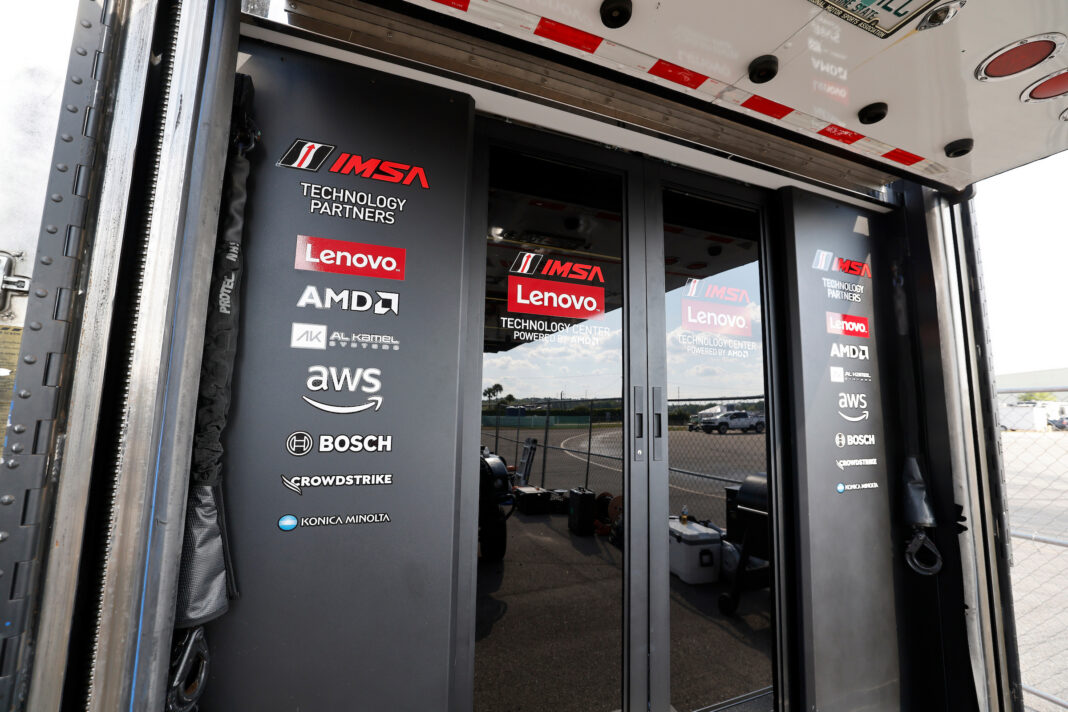
Its Technology Center already captures more than 10,000 individual data points every second, with Lenovo technology helping provide the computing infrastructure used to process information throughout a race.
The challenge is figuring out which pieces of that information would actually make the experience better for the person watching.
Multiclass racing, driver changes, traffic, fuel strategy, and different technologies within the cars give longtime fans plenty to follow. For someone discovering IMSA for the first time, they can also create a steep learning curve.
Doonan discussed finding new ways to educate newer fans, particularly younger ones, while giving existing fans the opportunity to become even more immersed in what is happening on track. That experience may not have to stay at the racetrack, either.
Doonan also discussed a potential subscription-based phone app offering a similar experience with access to less information. That creates two opportunities from the same technology: help someone understand their first IMSA race while letting a more experienced fan go several layers deeper.
Today, Lenovo’s technology already helps IMSA process an enormous amount of information in real time. What Doonan is describing asks a different question: How much of that information could eventually make the race better for the people watching it?
Fans shouldn’t need to become engineers to understand why something happening on track matters. But giving them the option to see a little more of what the engineers see could make the race even more interesting.