

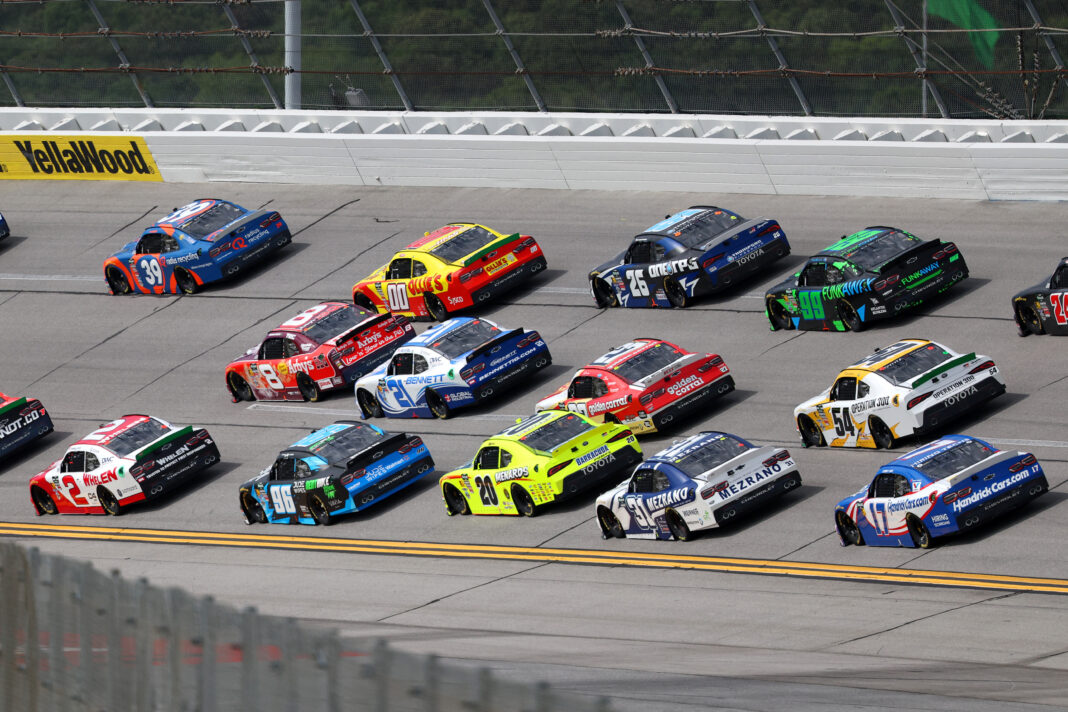


Fuel saving has become a familiar part of superspeedway racing, often taking priority over battling for position.
NASCAR has been trying to change that, and this weekend at Talladega Superspeedway, another adjustment is getting put to the test.
Following changes introduced at Daytona in August, NASCAR is reducing the rear spoiler from four inches to 3.5 inches for Sunday’s YellaWood 500.
At Daytona, NASCAR reduced the spoiler from seven inches to four and lowered horsepower from 510 to 465. The changes were intended to reduce drag while adjusting for reduced downforce, helping drivers build momentum and complete passes rather than getting stuck in the pack.
The results were encouraging, but fuel-saving strategies didn’t disappear. Now, NASCAR is taking another step toward addressing the problem.
Along with the smaller spoiler, the race will use stage endings at laps 98, 143 and 188, the same format used at Talladega in April. That means the final two stages are 45 laps each, short enough for teams to reach the finish without a scheduled green-flag fuel stop. In theory, drivers should have fewer reasons to conserve fuel and more opportunities to race aggressively.
But there’s a catch.
Just because teams don’t need to save fuel doesn’t mean they won’t find an advantage in doing so. And the opening 98-lap stage still leaves plenty of room for strategy.
With Talladega playing a role in the championship fight, teams aren’t necessarily going to sacrifice track position just to put on a better show.
NASCAR can change the aerodynamic package and adjust the stage lengths, but teams will always look for whatever gives them the best chance of finishing up front.
The real question on Sunday isn’t just whether drivers can race harder. It’s whether racing harder will actually be the smartest strategy.