

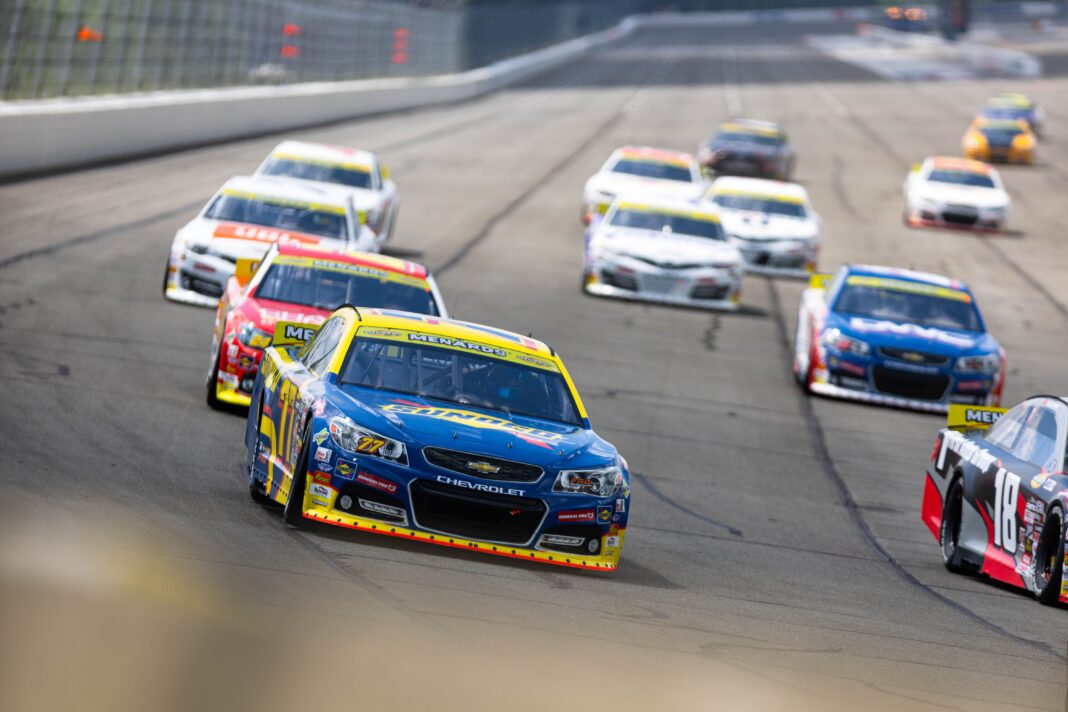


The ARCA Menards Series East and West have locked in their 2027 race plans, and the numbers show a clear split in strategy. The East will run eight events while the West takes on a grueling thirteen-race slate. Speedway Media broke the news on Tuesday that the East schedule will split evenly between four combined races and four stand-alone events. The West will only join the main ARCA series once, forcing teams to handle a heavy load of independent weekends. This setup demands more from crews and drivers who must keep cars running for longer stretches without a break.
The East season kicks off on March 27 at the historic Hickory Motor Speedway. That track hosted a near capacity crowd last year, proving the fans still show up for short track action. ARCA President Ron Drager noted the buzz around the region, stating, “We’ve seen some real excitement around the ARCA Menards Series East the last couple of seasons.” The series then heads south to Cleetus McFarland’s Freedom Factory in Bradenton, Florida, for a new stop on April 17. Daily Downforce confirmed this date, marking the first time the East will race on the three-eighths-mile track. It is a bold move to add a unique venue that breaks the usual rhythm of the season.
A Heavy Load for the West
The West faces a much tougher test with thirteen races starting at Phoenix Raceway on March 12. Alongside Kevin Harvick’s Kern Raceway, Phoenix stands as one of two tracks hosting the series twice. The season ends at Kern on October 30 for the second straight year. Drager praised the West momentum, saying, “We’re just as enthused with the momentum in the ARCA Menards Series West.” He pointed to strong car counts that created terrific racing and kept interest high in a series dating back to 1954.
Teams cannot coast on the West circuit. The long season means parts wear out faster and budgets get stretched thin. Drivers must master different track types without much time to rest. The addition of Idaho tracks shows the series wants to reach new fans, but it also forces teams to travel further. Nitro Motorsports is already preparing for this grind by signing George Phillips as their first full-time East driver. Phillips, an 18-year-old Toyota development driver, will pilot the No. 15 after two seasons in Super Late Models. He thanked the team for the chance to prove himself in a national series.
Why the Schedule Split Matters
The difference in race counts changes how teams plan their year. The East can focus on quality over quantity, while the West must prioritize survival and consistency. The East schedule follows tradition with returns to Nashville Fairgrounds Speedway on May 1 and Toledo Speedway on May 15. Iowa Speedway gets a visit on July 2, followed by a busy July with races at Flat Rock Speedway and Lucas Oil Indianapolis Raceway Park. Drager identified World Wide Technology Raceway as the series’ fastest and biggest venue in years, where the East concludes on August 20.
This structure tests the depth of the driver pool. The West needs more drivers to fill the grid for thirteen weekends. The East relies on a tighter group to keep the field competitive. The Freedom Factory race adds a new flavor with a different track layout and surface. It is a test of adaptability for drivers used to standard ovals. The series wants to build on recent success by mixing old stops with new challenges. The strong car counts from previous years prove the fans and drivers want this level of competition.
The West season finale at Kern Raceway on October 30 will determine the championship winner.