

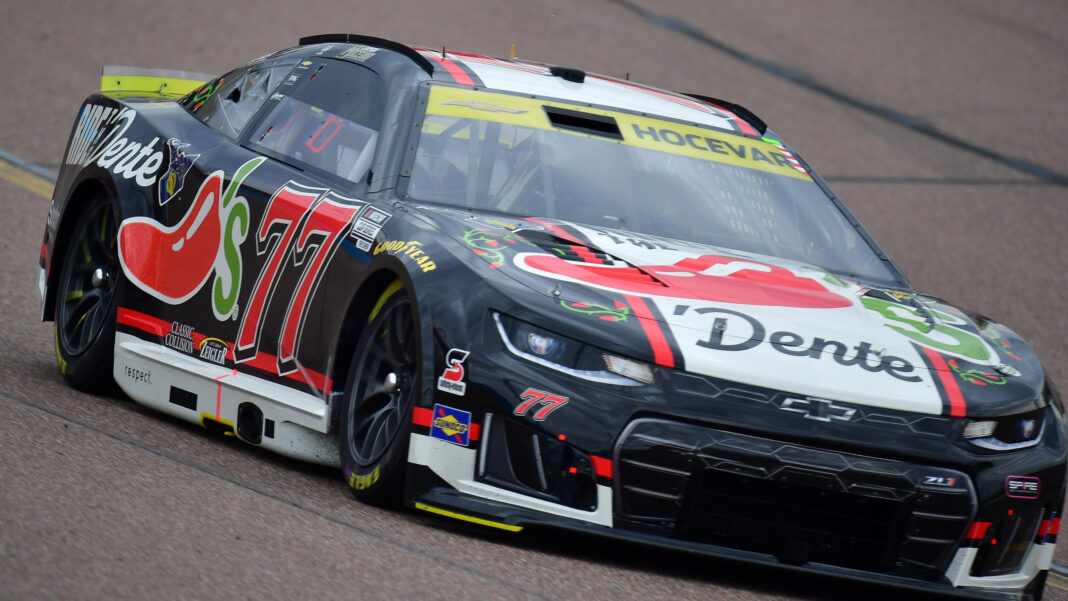


The most surprising fact about the penalties handed down to Carson Hocevar and Josh Berry is that NASCAR did not rely on race officials or TV replays to make the call. Instead, the sanctioning body used raw data pulled directly from the cars to prove exactly what happened. NASCAR Vice President of Competition Elton Sawyer explained on Tuesday that modern technology allows them to see every move with crystal clarity. This data showed that Hocevar slammed his brakes on the straightaways four separate times, ignoring his own spotter who begged him to stop.
Per Motorsport.com NASCAR Cup, the decision to fine Hocevar $100,000 and Berry $50,000 came after a deep dive into this electronic evidence. Both drivers lost 25 championship points each for their actions during the Xfinity 500 at Martinsville Speedway on Sunday. The data proved that Hocevar hard-braked in front of Austin Cindric, forcing the No. 2 Ford into the wall and ending his race. Berry also hard-braked once ahead of Ryan Blaney, causing similar damage to the Team Penske car. In the future, such conduct will not be permitted, according to Dave Moody of Sirius Speedway, whom Sawyer informed.
The Data Does Not Lie
NASCAR has made a major shift in how it handles on-track incidents by trusting the numbers over what drivers say in interviews. Sawyer noted that the organization can now pull vast amounts of information from the vehicles to review events long after the checkered flag waves. This approach ensures that the punishment fits the specific act of retaliation rather than just the outcome of a crash. “I think the world that we live in today with the amount of data we can pull off the cars and go back and review that, we can make better decisions,” Sawyer said.
The difference in fines reflects the severity of the actions captured by the sensors. Hocevar received the heavier $100,000 penalty because he repeated the dangerous maneuver multiple times while his spotter pleaded with him to cease. Berry faced a smaller fine because his incident happened only once, even though it still forced a rival into the wall. Sawyer explained that NASCAR wanted to get it right, which sometimes means waiting to gather all the information before making a final ruling.
Hocevar Admits He Crossed the Line
Carson Hocevar did not argue with the findings or try to blame the track conditions for his suspension. On Tuesday, a public statement released by the 23-year-old driver acknowledged that he disappointed those who provided his opportunity to compete in the Cup Series. He wrote on X that this was an embarrassing day for him and that he crossed the line with his on-track actions. His words showed a clear understanding that his behavior went beyond the rough edges of short-track racing.
“I let the people down that gave me the opportunity of a lifetime to drive a Cup car,” he wrote in his statement. The team, Spire Motorsports, had already suspended him from the season finale at Homestead-Miami Speedway before NASCAR announced its own penalties. Co-owner Jeff Dickerson made it clear that the team expects professionalism from everyone wearing their uniform. Accepting the ruling, Hocevar expressed anticipation for a 2027 return as an improved teammate and driver.
A Warning to All Drivers
The penalties send a strong message that drivers cannot use the new softer bumpers as a weapon to ruin other competitors’ days. Sawyer pointed out that drivers asked for these changes to improve safety and reduce divebombing, yet Hocevar and Berry used the car structure as a strategy to cause chaos. This misuse of the car design required a firm response from the league to protect the integrity of the sport. Kevin Harvick called the move the “dirtiest of dirty tricks” and compared it to an intentional hit on the field.
“Yeah, usually you hold that for your worst enemies,” said Harvick on his weekly show, noting that such tactics are meant to start a war. Sawyer agreed that Martinsville would be the first test for how drivers handle the bump and run, but using the car to destroy another driver was not part of the plan. The league now aims to make calls in real time using this data, so fans do not have to wait days for justice. “We knew Martinsville would be the first test as far as being able to, how they could bump and run, and that’s part of our DNA, that’s part of Martinsville,” Sawyer said.
The focus now shifts to Homestead-Miami Speedway, where Justin Haley will drive the No. 77 car in place of Hocevar for the championship finale. NASCAR will crown three champions over the weekend, hoping the controversy does not overshadow the end of the season.