

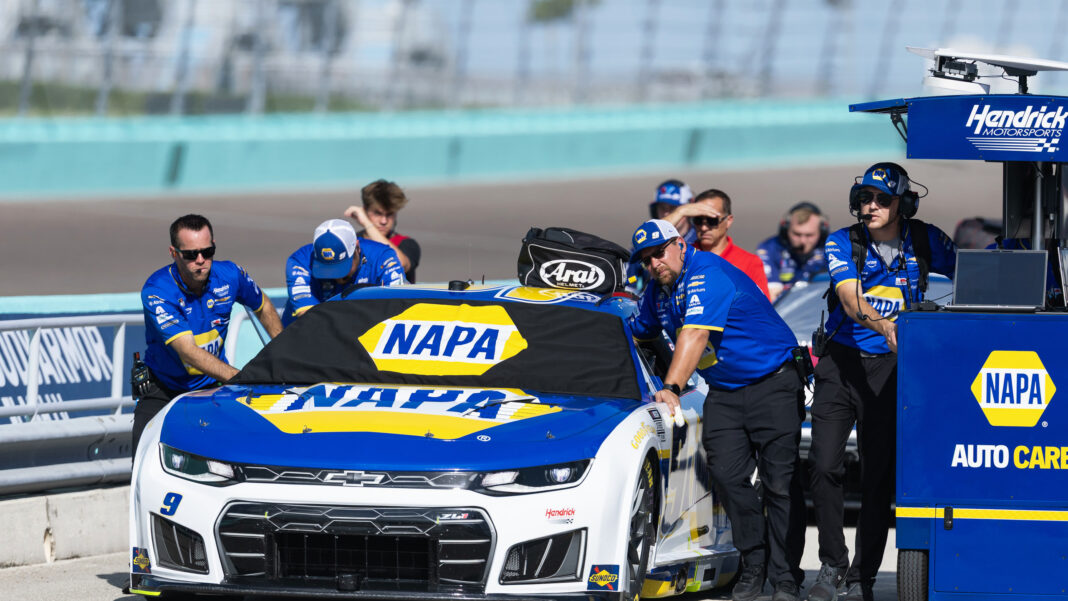


As the 2027 NASCAR Cup Series roster forms, time runs short for multiple elite drivers. Chase Elliott and Alex Bowman have confirmed deals that run through the 2027 season, according to Daily Downforce. Bowman intends to stop full-time competition following that concluding season. Kyle Larson is signed through 2031, giving him a long runway with Hendrick Motorsports. William Byron also has a secure future, with his contract extending through 2029.
Not every driver has a public expiration date on their deal. Denny Hamlin’s precise end date remains undisclosed even though he signed a multi-year extension in July 2025. Many additional drivers possess long-term contracts with undisclosed public dates. A confirmed ride does not always mean the contract length is public knowledge. The gap between a confirmed seat and a known end date creates uncertainty for teams planning their next moves.
Who Faces the Heat in 2027?
Some drivers enter 2027 in a contract year, which changes how they drive. Public confirmations show Elliott and Bowman signed deals extending through 2027. Agreements for Ross Chastain, Austin Zilisch, and Gabriel van Gisbergen reportedly extend to 2027 too. Bubba Wallace is confirmed for 2027 at 23XI Racing after signing a multi-year renewal in 2024. Tyler Reddick also secured a long-term extension in 2026, though the end date is not public. Corey Heim has a full-time Cup ride confirmed for 2027, but the contract length is undisclosed.
Front Row Motorsports has mixed clarity on its roster. Noah Gragson signed an extension through 2026 with reported options beyond that season. Todd Gilliland re-signed for 2027, but further terms are not confirmed. Zane Smith holds a multi-year agreement signed in 2025. At Haas Factory Team, Cole Custer’s contract length is not publicly disclosed. Joe Gibbs Racing has long-term deals for Christopher Bell and Ty Gibbs, but the exact length for Gibbs is undisclosed. A.J. Allmendinger at Kaulig Racing has a deal running through 2029 with an option through 2032, per reports.
Horsepower Hikes and Rule Changes
While drivers sort out their seats, the cars are getting more power for 2027. Starting at the May Charlotte race, the intermediate engine package horsepower increases from 670 to 750. The All-Star Race at North Wilkesboro will feature an 800-horsepower package. Officials anticipate the Next Gen race car becomes harder to drive due to higher output. They also plan to place a greater emphasis on tire management with these higher limits.
John Probst, president of NASCAR Event Management, explained the push for more speed. “As always, we listen to our fans a lot,” said Probst. “We get input from all the stakeholders in our sport, and it’s probably one of the clearest messages that we get from all those directions is to add horsepower.” He added that NASCAR wants to be bold and aggressive but must be deliberate in how they roll out changes. These power increases will test the skill of drivers who are already fighting for new contracts.
The rules also address unapproved race absences. Prior to The Chase, a impacted team owner or driver begins with 2,000 points. Missing an event during The Chase resets the point total back to 2,000. Sealed engines are mandatory for full-time Cup teams competing in a minimum of 20 points events. These strict rules mean every race counts toward a driver’s future. Teams cannot afford to sit out events without losing ground in the standings.
The NASCAR Canada Series also unveiled a 10-race slate for 2027 confined to Ontario and Quebec. Jukasa Motor Speedway in Cayuga, Ontario returns on July 24 for its initial race since 2020. Rick Ware Racing confirmed a two-car 2027 entry with D.J. Kennington in the No. 51 Chevrolet. According to reports, Rick Ware stated “a proven winner who knows this series inside and out,” is Kennington.