

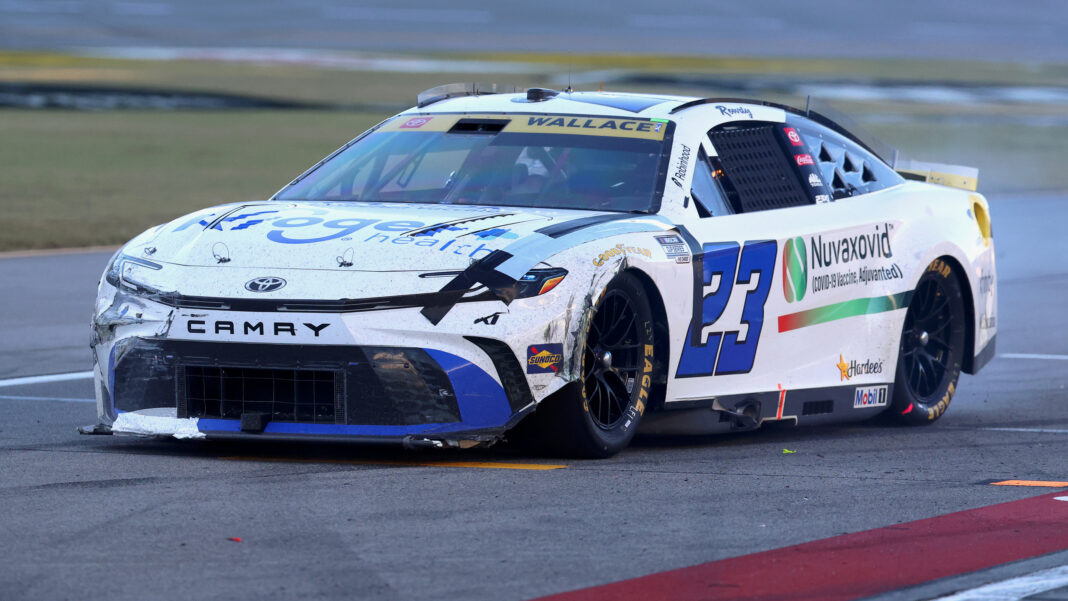


NASCAR fans are screaming for Bubba Wallace to be the bad guy, yet no one can agree on what he actually did wrong. The anger started after a blunt radio message at Talladega where Wallace told his team he was helping teammate Tyler Reddick. Some people say he was selfish for not pushing hard for his own win. Others argue he just protected his own race while driving for a top team. The noise is loud, but the facts are messy. Freddie Kraft, Wallace’s spotter, stepped in to say the driver was reacting to a dangerous crash, not refusing to help. This back-and-forth proves that fans are judging a person’s character instead of looking at the track.
The real story is that Wallace is a pro who makes decisions under fire, just like any other driver. The intensity of the reaction raises a simple question: Would this be a huge story if a white driver said the exact same thing? The answer matters because every driver deserves the same standard. Wallace has a big following and a loud group of critics who treat every mistake as proof of everything they already think. That is not good racing analysis. The track does not care about your feelings. It only cares about who crosses the finish line first.
The Rules Behind The Yellow Line Drama
While fans argue about Wallace, the real drama on the track focused on Kyle Larson’s win. Larson beat teammate William Byron by just 0.041 seconds after a wild final lap. People immediately asked if Larson broke the double-yellow line rule to get ahead. NASCAR officials looked at multiple camera angles to make sure Larson stayed within the rules. Brad Moran, the managing director, said the review showed Larson was safe. “We certainly looked at it. We reviewed it, and in our judgment, the No. 5 was definitely on the line, not below it,” Moran said, according to Yahoo Sports.
The rule is clear. Drivers cannot use the area below the line to pass or gain an advantage. Moran explained the specific standard for penalties. “You have to have your two left-side tires clearly below the yellow line to be penalized,” he said. Larson kept his win because his car stayed on the line. Officials also checked other cars that went low, like the No. 1 and No. 77. They found those cars were below the line only because they were avoiding a crash. Moran noted, “We called that one basically accident avoidance. The No. 34 was coming down, and we called that part of racing.”
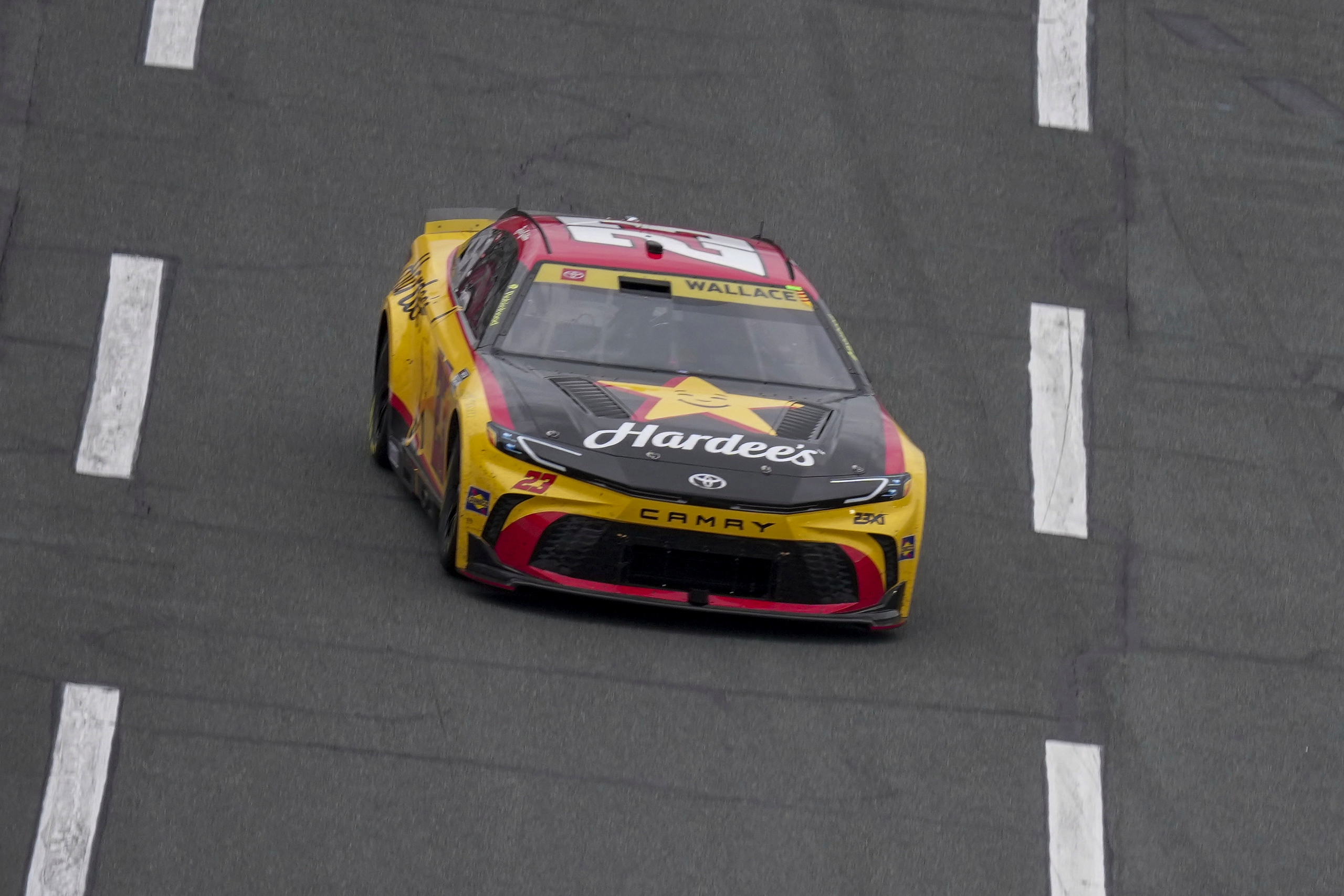
Why The Crowd Is So Confused
The confusion comes from mixing up racing strategy with cheating. Larson’s move was close, but officials felt it was necessary to stop a wreck. “When it’s that close coming to the checkered flag, we felt that call was necessary to prevent a wreck, which we’ve called it that way in the past as well,” Moran said. The rule exists to stop drivers from driving below the line just to pass someone else. Moran clarified, “If you clearly drive down below the double yellow lines to advance your position or make a pass, you’ll be penalized.”
Fans want a villain, so they pick Wallace. They want Larson to be a hero, so they ignore the gray areas. However, the sport requires individuals to evaluate what truly occurs on the track. The TV ratings for the race went up slightly, with 2.581 million people watching. That shows people still care, even if they are arguing about the calls. The next test is at Martinsville, where Larson can clinch the championship.