
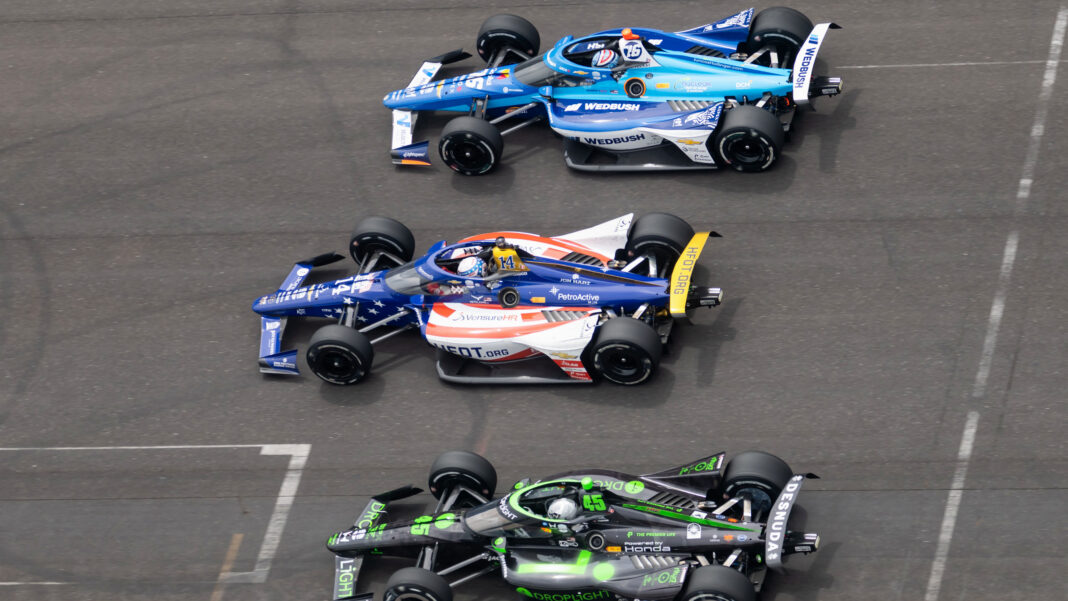


Juncos Hollinger Racing finished the 2026 season with a tale of two drivers, according to Motorsport.com. Rinus VeeKay delivered a career-best campaign that pushed the team into the top 10 of the standings. He scored 378 points to land in 10th place overall. This result marked the first time the Indiana-based outfit ever achieved such a high finish in the Drivers’ Championship. The team operated with a small budget yet consistently outperformed its financial footprint on the track.
While VeeKay soared, his teammate Sting Ray Robb faced a much harder year. Throughout the full 18-race schedule, Robb did not achieve even one top-10 result. He finished 25th in the final standings with a best result of just 11th place. He became the only full-time driver in the series to miss the top 10 completely. This stark contrast defined the team’s 2026 narrative for fans and analysts alike.
The VeeKay Breakthrough
Rinus VeeKay’s success started early and built momentum all season long. A strong ninth-place performance on the St. Petersburg streets marked his season opener. His performance peaked during the Month of May at the Indianapolis 500. The Dutch driver qualified 11th and charged through the field to finish sixth. That run secured the organization’s best-ever result at the Brickyard.
His consistency remained high through the summer months. VeeKay posted fourth-place finishes at World Wide Technology Raceway, Mid-Ohio, and Portland. At Mid-Ohio, he even fended off series champion Alex Palou in an unsponsored car. The season climax came at the Milwaukee Mile doubleheader. After leading 25 laps in Race 1, he started 24th in Race 2 and drove to a third-place finish. This podium stood as the team’s only one of the year.
The numbers tell a clear story of growth. Across 18 starts, VeeKay secured four top-five finishes and eight top-10s. Both marks were personal career highs for the 25-year-old. He proved his speed was not just a lucky streak but a result of genuine pace. The team’s engineering group gelled with him immediately after his move from ECR. This partnership turned a mid-pack team into a regular contender for top-10 results.
Robb’s Struggles and the Path Ahead
Sting Ray Robb’s year was defined by a lack of qualifying speed. He posted an average starting position of 22.4 over the course of the season. Starting from the back of the field every weekend made it nearly impossible to score points. Mid-pack attrition caught up with him frequently during races. A heavy collision in August at the Freedom 250 Grand Prix in Washington, D.C. was just one example of the bad luck he faced.
Robb entered 2026 with continuity alongside his engineering group, yet the results did not improve. He simply could not extract the speed needed to compete at the front. The team’s small commercial footprint likely hurt their ability to develop the car for him. While VeeKay found a rhythm that worked, Robb remained stuck in a cycle of fighting from the rear. This gap between the two drivers highlights the challenges smaller teams face when trying to build depth.
Despite the struggles, the team showed it can compete when the car is right. VeeKay’s podium at Milwaukee proved the machinery has potential. The challenge for 2027 will be finding a way to replicate that speed for both cars. Juncos Hollinger Racing cannot rely on one driver to carry the entire program. The organization must solve the qualifying puzzle if it wants to move up the grid permanently.
The 2027 season will bring new tests for the Indiana-based outfit. Fans will watch to see if the team can maintain the momentum VeeKay built. Juncos Hollinger Racing has shown it belongs in the top 10, but consistency remains the key to survival.